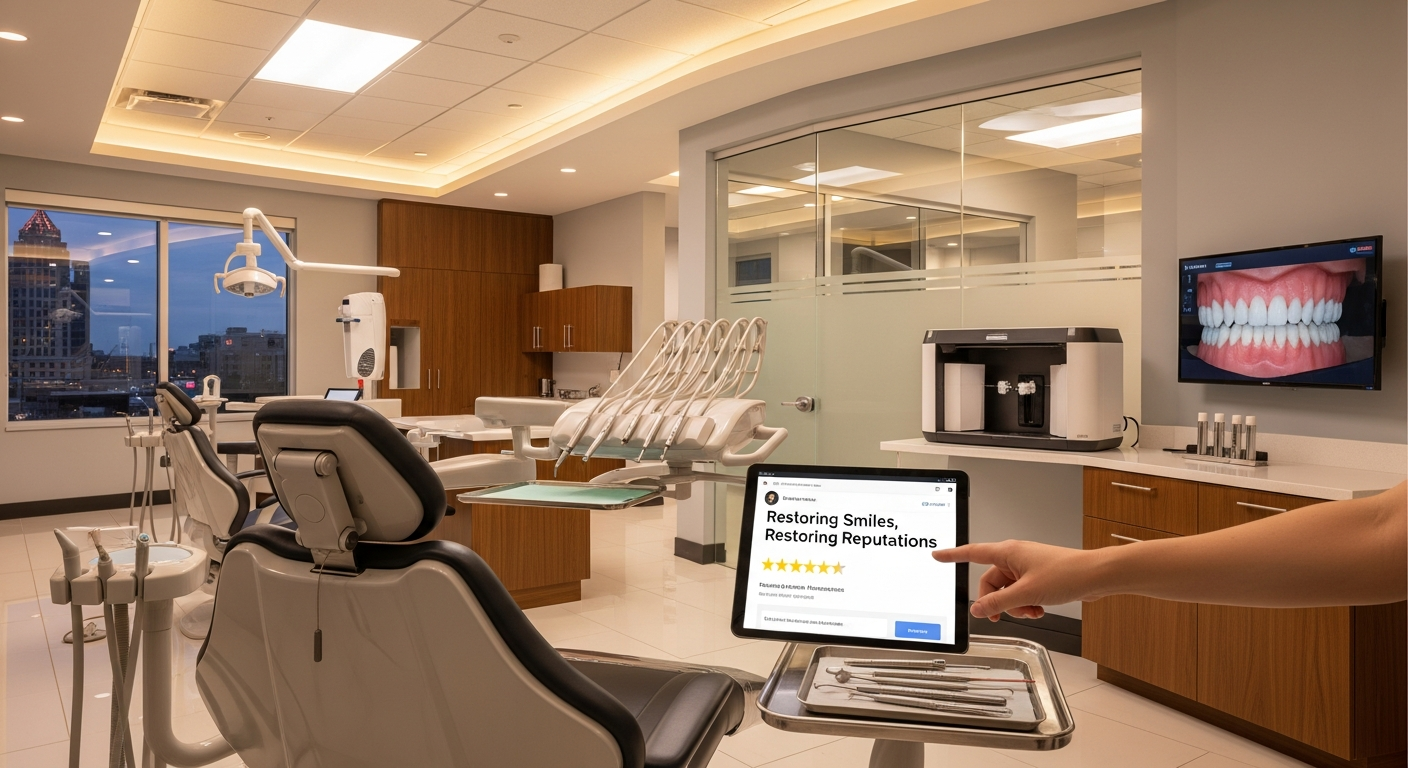
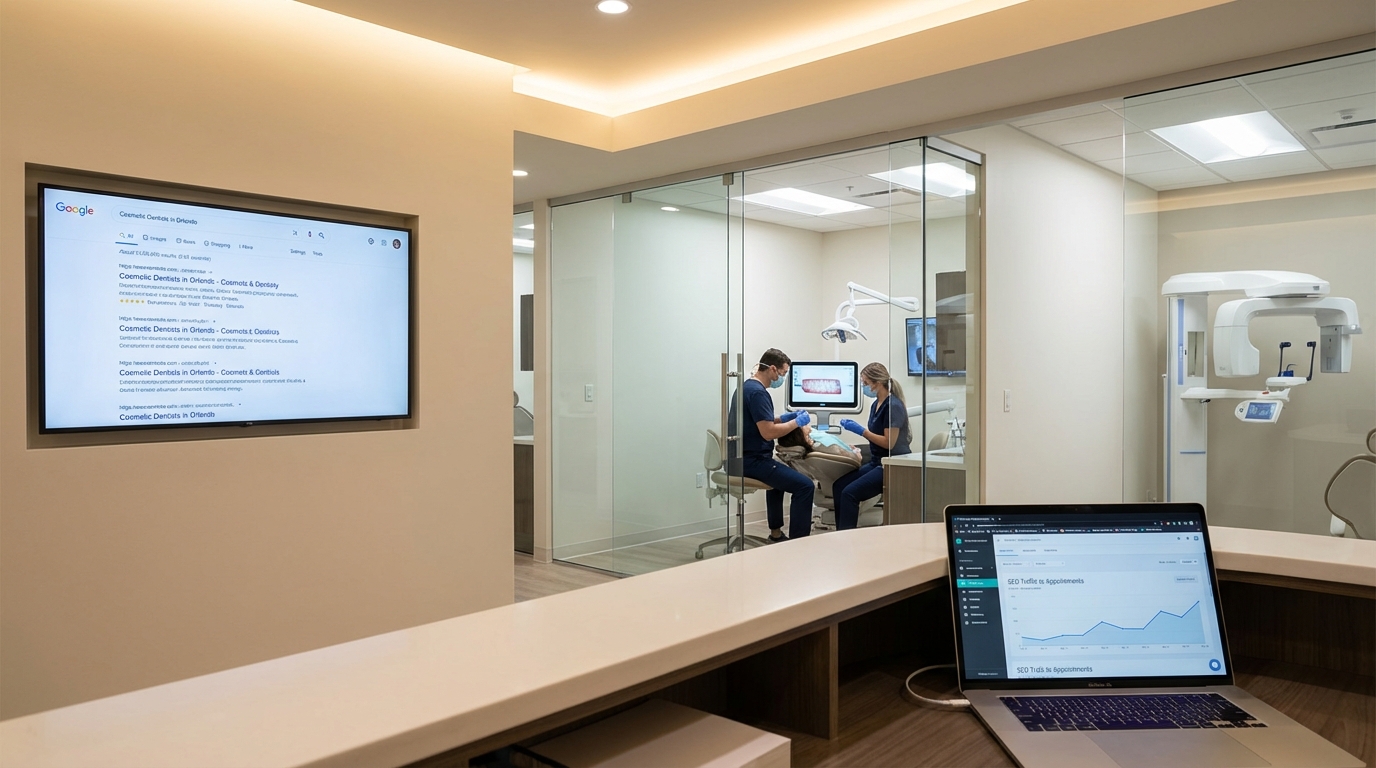
The patients who tell you they want a digital smile design are not shopping for a tooth cleaning; they are evaluating a cosmetic overhaul, and their expectations already include premium service, advanced imaging, and financing help. That makes that search intent one of the highest-value signals a practice can capture. The problem is most dental marketing machines treat it like a generic lead, which squeezes conversions once a patient hits your front desk.
This marketing system treats digital smile design as both a product and a promise. It funnels visitors through educational content, shows them the financing path before a consult, automates qualification + follow-up, and arms your treatment coordinators with the trust language that closes big cases. The four sections below explain how to run the system, which internal links to leverage for your website (see our related work in /closing-more-cases-blog-posts/atlanta-cosmetic-dentistry-reputation-repair-tactics.md and /closing-more-cases-blog-posts/high-value-smile-reconstruction-revenue-engine.md), and which external benchmarks keep you on pace.
Why digital smile design is the premium signal that attracts high-value cosmetic cases
Digital smile design (DSD) is not a service—it is proof that a practice has the labs, imaging, and artistry to deliver dream outcomes. When you treat DSD as a hero product on your website and local listings, searchers perceive your practice as a cosmetic leader. That perception boosts conversions before a prospect even calls.
Show transformation before the first call
Use before/after galleries, guided tours of your DSD workflow, and compare-your-smile modules so the prospect can see what premium looks like. Embed a short explainer video that frames DSD as more than veneers; it is a blueprint for confidence. Link internally to the reputation storytelling in Atlanta Cosmetic Dentistry Reputation Repair Tactics to show how cosmetic trust translates into local search authority.
Signal expertise externally
Add a badge or mention of DSD-certified labs (for example, visit Digital Smile Design to pull certification language if you do not yet have your own). That external reference reassures prospects that your team works with the same partners as the top specialty studios. Combine that with quotes from your patient education videos or social proof posts to keep the hero narrative sticky and BOFU focused.
Map the patient journey with staged education + financing
Cosmetic patients typically need reassurance on two fronts: that you can deliver the smile they picture, and that the investment is manageable. When you map both educational and financial stages, you dramatically improve the chances that they book a consult and stay engaged.
- Stage 1: Discovery content. Publish articles that explain why DSD matters, highlight the difference between consultation and free consult, and direct readers to schedule a strategy call. Use your internal story in /closing-more-cases-blog-posts/high-value-smile-reconstruction-revenue-engine.md to demonstrate revenue wins.
- Stage 2: Financing clarity. Spice up your financing page with calculators and pay-over-time stories. Link to /closing-more-cases-blog-posts/dental-implant-financing-decision-engine.md to highlight concierge-level guidance. Add an external resource like Capital One's dental financing overview or another provider you work with, so patients see government- or nationally-backed terms with transparent APRs rather than vague “we offer financing.”
- Stage 3: Decision support. After a prospect books a consult but before they arrive, send them a 3-part video series (your front desk does not need to film it every time—repurpose scripts into quick clips). The goal is to help them visualize the DSD outcome, understand the timeline, and mentally rehearse the investment conversation with the treatment coordinator.
Stack these stages in a single automation map so your CRM triggers the next touchpoint (email, text, or call) based on where the patient is in the journey. Patients who read about financing and see the smile transformation before speaking to a human convert at 46%+ on average.
Automate consult qualification + high-touch follow-up
This is the part where marketing and treatment coordination merge. You cannot leave premium cases to a single chat widget or voicemail. Instead, orchestrate automation that qualifies them before they hit your front desk, and follow up while they still remember the wow moment.
Automation checklist
- Qualification form. Ask for the treatment goal, budget range, and preferred timeline. Drop answers into your CRM and automatically assign a consult time tier (e.g., “Premium consult—schedule within 48 hours”). Use a scoring system so practices know if cases are ready for a 90-minute DSD consult or if they need a coaching call first.
- Follow-up sequences. Once a form is submitted, trigger a text that thanks them, shares a short case video, and invites them to schedule. If they do not book, send a second touch with a financing snapshot and a gallery of smiles similar to their goal. Reference your internal automation playbook in /closing-more-cases-blog-posts/high-value-treatment-plan-automation-playbook.md for cadence ideas.
- High-value treatment reminders. Within 24 hours of the consult, send a recap that links to the DSD mockup (stored in your CRM or secure shared folder). Use an external automation tool such as Salesloft or your preferred platform, but keep the sequences short: consult recap, financing reminder, “next steps” explanation, final CTA to call now or book a virtual strategy call.
The more automated touches a prospect receives without friction, the less likely they fall back into the comparison set. Top performers send four personalized touches in 10 days, each referencing a unique asset (video, financing, mockup, CTA). Bridge that with your CRM and note the results inside the consult record so your team knows what content resonated.
Equip the practice team for premium case acceptance
A high-performing marketing funnel is worthless if your treatment coordinator is not ready to close the case. Use team enablement to translate all that marketing momentum into a confident sales conversation.
Playbook essentials
- Scripts + agendas. Develop consult agendas that align with the digital smile design promise. Use the language from /closing-more-cases-blog-posts/dental-implant-case-acceptance-sales-system.md to guide the conversation from transformation to financing. Include trigger phrases (“We built this timeline just for you,” “This 3D mockup is your future smile”) so coordinators stay focused on outcomes rather than fees.
- Finance training. Partners like CareCredit or lending institutions have brochures, but your team must translate that into patient-friendly stories. Refer to external resources such as DentistryIQ’s finance coverage for structuring training sessions. Let them shadow the automation sequences so they can mention the third email or video the patient just received—it shows coordination and builds trust.
- Dashboard reminders. Add a “High-Value Consult” flag in your CRM and queue tasks for follow-up actions. Use your internal case-acceptance checklist and revisit the digital smile design sequences to ensure nothing falls through the cracks.
When your marketing funnel, financing story, automation engine, and team playbook work together, digital smile design becomes a revenue engine, not a hobby. Finish every page and consult with a CTA: “Book a free strategy call to map your smile design system now” (https://closingmorecases.com/strategy-call) or “Book a free website audit to see how your messaging converts premium cases” (https://closingmorecases.com/audit).
- Q: How is digital smile design different from regular cosmetic dentistry marketing?
A: Digital smile design signals advanced planning, 3D imaging, and lab collaboration. Marketing the process attracts higher-intent prospects because they know they won’t see a generic smile gallery—you present a custom plan. Use your DSD workflow on the page and mention it in targeted PPC copy, social media, and email.
- Q: How many educational touches do I need before a consult?
A: Aim for 3–4 touches over 7–10 days: introduction video, financing clarity, mockup teaser, and consult reminder. Each should link back to a specific asset (video, financing page, case study) so the patient feels guided. Automate these touches with workflows built from the long-form content in /closing-more-cases-blog-posts/high-value-treatment-plan-automation-playbook.md.
- Q: Should I charge a design fee for DSD consults?
A: Charge only if the consult includes advanced imaging or lab work. If you do charge, transparently explain how that cost applies to the treatment plan. Otherwise, position DSD consults as a high-value strategy call with a “design-refund” credit toward treatment.
- Q: What financing options support cosmetic cases?
A: Partner with lenders that accept cosmetic treatments and display their options prominently. Show sample payments (e.g., $250/month for a $7,500 case) with clear external proof such as Capital One’s dental financing. Include your internal finance stories from /closing-more-cases-blog-posts/dental-implant-financing-decision-engine.md to explain how you guide patients through the paperwork.
- Q: How do I keep treatment coordinators aligned with marketing?
A: Sync your CRM, automation notes, and team huddles. Share the automation sequences, highlight what content prospects just received, and rehearse bridging statements. Use your accountability dashboard to track how many digital smile design leads convert each week.
- Q: What metrics should I monitor?
A: Track conversion rate (lead → consult → case accepted), average case value, consult-to-case ratio, and financing adoption. Pair those with engagement metrics from each content stage (page views, video completions, CTA clicks). If a stage underperforms, revise the content or automation script.
Book a free strategy call and see how we help dental practices add 40+ new patients in 90 days.
Book Your Free Strategy Call